

Wine Brand - California
Our Discovery Process
Our process starts with a strong foundation. From there, we grow your customer base into additional buyer profiles.
-
We focus on the actual search terms your ideal customer.
-
We test the performance of these search terms (measured in units sold - not a vanity metric).
-
We iterate until we see your customers grow,
-
We add content for vastly different search terms (such as boutique organic wine vs. Mother's day wine fast shipping).


Case Study: A California Wine Brand
The problem: Our client has well-rated, exclusive wines that ship mostly online. They had trouble reaching their ideal customer.
Here's a walkthrough of our process for identifying the search terms to target:

Keywords: High Intent, Low Competition
First, we used SEO tools to identify potential keywords:
What We Found
"sangria recipe"
These Googlers are unlikely to buy boutique wine online. It's sangria time now!
Down the road, this search term might make sense...but not at this stage of brand awareness.
"Mother's Day wine"
Unlike sangria, this is a perfect search term to target.
These searchers are ready to buy now (buyer intent: high) and
relatively few websites target this term (competition: low).
But, SEO isn't just about targeting the specific keywords.
>> It's also about timing.
If you create "Mother's Day wine" content in the fall, you'll wait a long time before it leads to customers. Better to focus on other content in the meantime.
The Result
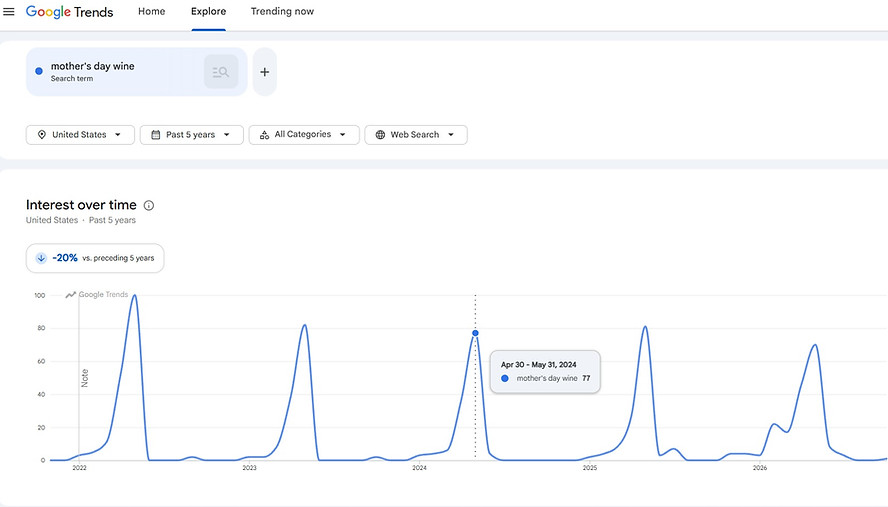
We timed the blog post to release before April.
Why? Check out the Google Trends screenshot below. April is when interest spikes!
It makes sense but searchers sometimes surprise us by buying early - especially when it comes to online sales.

Keywords: High Intent, Low / Medium Competition
Here's an example of how keyword analysis can shape a client's business strategy.
>> It's also why we schedule a meeting at this point to align on strategy.
"corporate holiday gifts" & "company Christmas presents"
These are very specific search terms - and they're ones that would be challenging to identify without specialized SEO tools.
Both are potential goldmines. There aren't too many websites using these keywords (competition is low-medium) and buyer intent is high.
Plus, the client can establish a corporate relationship with guaranteed sales of hundreds of wines every year.
However -
The client is a small, boutique wine company. They may not have the product to deliver on such a large order.
There are 2 routes we proposed:
1. Wait to target these keywords until they have the inventory.
2. Create the content without the ability to buy. Instead, the company could be put on a waitlist - driving the idea that this is an exclusive wine.
>> It is up to the client if we pursue these search terms or not.

Keywords: High Intent, High Competition
"advent calendar wine"
I love this one. Honestly, many on our team (apart from our wine specialists) hadn't heard of advent-themed wines/teas/etc.
Look at the average monthly searches for this one - 10k-100k.
Jackpot! (Potentially.)
But, take a look at the competition - high.
Again, this search term is constrained by inventory. Often, advent wines have 12 or 24 wines...and customers want a variety of wines in this pack.
Our client typically has 5-7 different wine varieties - a problem when creating these collections.
In this case, the client opted to wait until more wines were added.
But, it gave them a lucrative goal to work toward.
